Comprehensive Reflections to Aid in Governance
By Sima Guang
Translated By Yiming Yang
Annals of Zhou Book 4 Scroll 4 (continued)
The 32nd year of King Nan(283 B.C.)
The officials from the kingdoms of Qin and Zhao held a meeting at the city of Xiang. Subsequently, the army of Qin successfully seized the city of Ancheng from the kingdom of Wei. Embarking on an extensive campaign, the Qin army marched all the way to Daliang, the capital of Wei, before eventually returning.
After the death of King Min of Qi at the hands of Nao Chi, his son, Fazhang, changed his name and sought refuge as a servant for the family of Taishi Jiao in the city of Ju. Concealing his identity, Fazhang caught the attention of Taishi Jiao’s daughter, who sensed that he was not a commoner. Compassionate towards him, she stole food and clothing to support him, and their relationship blossomed romantically.
Meanwhile, Wangsun Gu, an assistant of the deposed King Min of Qi, lost contact with the king and was unaware of his whereabouts. Wangsun Gu’s mother expressed her concern and confusion about her son’s return. She said, “I stand by the door and look when you go out in the morning and return at night. I stand by the neighborhood gate and look when you go out in the evening and do not return until late. You worked for the king, and the king is gone, and you don’t know where he is. Why do you come back?” She expressed confusion over his loyalty to a vanished king. Wangsun Gu took decisive action by going to the market and making a public proclamation. He shouted, “Nao Chi overthrew the kingdom of Qi and murdered the king! Whoever wants to help me kill Nao Chi, please bare your right arm!” In response to his impassioned call, more than four hundred people in the market answered.
This mob successfully attacked Nao Chi, leading to his demise. Following this, the exiled ministers of Qi began searching for King Min’s son. Fazhang, fearing for his life, hesitated before revealing his true identity. Eventually, the ministers installed him as the new king of Qi, and they called on the people to defend the city of Ju against the impending invasion by Yan. Posters were circulated to announce the inauguration of the new king at the city of Ju.
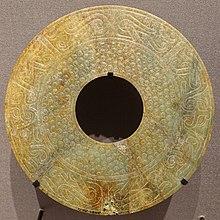
The king of Zhao possessed a rare jade annulus named Heshi, obtained from the kingdom of Chu. The king of Qin, Zhao‘s neighboring kingdom, coveted this precious jade and offered fifteen cities in exchange for it. Faced with a dilemma, the king of Zhao hesitated, fearing both offending the powerful kingdom of Qin and being deceived by them. Seeking counsel, he turned to his minister, Lin Xiangru, for advice.
Lin Xiangru proposed a strategic approach: “If your grace does not approve the city-trading arrangement involving jade, we would have snubbed the king of Qin. Conversely, if the kingdom of Qin refuses to cede the cities even after receiving the jade, they will be indebted to us. Considering these alternatives, I prefer endorsing the deal and establishing a sense of obligation on the part of the kingdom of Qin. I am willing to proceed with the jade disk, committing to return it in pristine condition should the king of Qin renege on the jade-for-cities agreement.”
Following this advice, the king of Zhao sent Lin Xiangru to Qin. Upon meeting the king of Qin, Lin Xiangru sensed the latter’s reluctance to fulfill the deal. Ingeniously, Lin Xiangru tricked the king of Qin into letting him handle the jade disk. Secretly passing the jade to his assistant, Lin Xiangru instructed him to take detours, returning to the kingdom of Zhao immediately. Meanwhile, Lin Xiangru stayed behind to deal with the king of Qin.
Impressed by Lin Xiangru‘s selfless act, the king of Qin not only admired him but also allowed him to return home amicably. In recognition of his wisdom and loyalty, the king of Zhao promoted Lin Xiangru to the position of chief minister of Zhao.
Lord Si of Wey, known for his keen observance and curiosity about the privacy of others, passed away, and his son, Lord Huai, succeeded him. Lord Si was characterized by his attention to details and a knack for handling matters discreetly.
In one instance, a county magistrate revealed his worn-out mattress when he uncovered his beddings. Hearing about this, Lord Si responded by giving the official a new mattress, leaving the magistrate astonished and even believing that Lord had supernatural powers.
To test the integrity of a checkpoint attendant, Lord Si sent his lackey through the checkpoint with gold as a bribe. Later, he summoned the attendant and questioned him about whether he had accepted or refused the gold from passengers. The checkpoint attendant was terrified.
Lord Si of Wey favored a concubine named Xie and held Minister Ru Er in high regard. Wary of his personal biases affecting his judgment, Lord Si appointed another minister, Bo Yi, to a higher position to counterbalance the influence of Ru Er. Additionally, he showed more respect to another concubine named Wei. Lord Si referred to these actions as balance acts.
Xun Kuang made this comment: Marquis Cheng of Wey and Lord Si of Wey were money-grubbers and bean counters. They had not won the hearts of the people. In contrast, Zi Chan of Zheng had won the hearts of his people while simultaneously running an effective government. Guan Zhong of Qi had not only run an effective administration but also advanced propriety.
Those who have advanced propriety become the hegemon; those who have run an effective administration strengthen the state; those who have won the hearts of the people enjoy peace and prosperity; those who only pursue wealth are destined for doom.
The 33rd year of King Nan(282 B.C.)
Qin‘s forces launched an assault on the kingdom of Zhao, capturing two cities.
The 34th year of King Nan(281 B.C.)
The troops of Qin raided the kingdom of Zhao, seizing the city of Shicheng.
Marquis Rang of Qin, also known as Wei Ran, resumed his position as the prime minister of Qin.
The kingdom of Chu had intentions to form an alliance with the kingdoms of Qi and Han, aiming to launch a campaign against the kingdom of Qin. Additionally, they plotted against the court of the Zhou dynasty. In response, King Nan of Zhou dispatched Wu Gong from Eastern Zhou to persuade Zhao Zi, the prime minister of Chu, stating, “You should not scheme against the dynasty of Zhou.” Zhao Zi replied, “There is no such scheme. However, why not though?” Wu Gong explained, “The land of Western Zhou is less than one hundred square miles when rounded up. Its king holds the title in name only and lacks the resources to enrich a state or strengthen an armed force. Attacking the king of Zhou would lead to being labeled a king assassin. Despite these challenges, there are those who still plot against the kingdom of Zhou, driven by their desire for the coveted sacrificial vessels stored there. It’s akin to hunting tigers, where the meat is unsavory, and the defense is lethal, yet people still pursue it. Conversely, dividing up the land of the kingdom of Chu would bring wealth to all involved; humiliating the king of Chu would earn fame for every king. If the goal is to raid the relics of the lord of the world and possess the sacrificial vessels of three dynasties, moving them south would attract the invading army to your doorstep.” Following this exchange, the kingdom of Chu abandoned its plan.
 Reflection by Rio Grande
Leave a comment