Comprehensive Reflections to Aid in Governance
By Sima Guang
Translated By Yiming Yang
Annals of Zhou Book 3 Scroll 3 (continued)
The 16th year of King Nan (299 B.C.)
King Wuling of Zhao held a significant ceremony, gathering all in the east court on the day of Wu-Shen in May according to the Lunar calendar. During this event, he announced his intention to pass on the title of King to his young son, Zhao He. Following this declaration, the new king visited the kingdom temple to offer prayers to the ancestors. Subsequently, he held court appearances, granting an audience to all the officials.
Fei Yi was appointed as the prime minister and also became the tutor of the newly anointed king. King Wuling adopted the title of “The Father Lord” and aimed to instill governance in his son, Zhao He. King Wuling adopted a different appearance, donning Nomadic clothing, and led his aides in expanding territories from the Nomads in the Northwest.
In a bold move, King Wuling planned to assail the capital of Qin, Xianyang, by advancing through areas like Yuzhong and Jiuyuan. To carry out reconnaissance and gather intelligence, he disguised himself as an ambassador from Zhao to Qin. Traveling to Xianyang, he interacted with the King of Qin, observing the geography of Qin and studying its ruler along the way.
However, the King of Qin, suspicious of the ambassador’s imposing appearance and demeanor that didn’t align with that of a typical envoy, sent guards to pursue him. By the time they investigated further, King Wuling, the “Father Lord,” had already cleared all the passes of Qin. Upon realizing the true identity of the visitor, the people of Qin were left astonished by the audacity and cunning of King Wuling.
The Kings of Qi and Wei held a meeting within the kingdom of Han.
In another event, the army of Qin carried out a raid on the kingdom of Chu, capturing eight cities. Following this incursion, the King of Qin sent a letter to the King of Chu, expressing his grievances: “You and I pledged brotherhood during our meeting at Huangji. When your Crown Prince visited as part of our pact, our joy knew no bounds. However, my profound anger arose when your Crown Prince murdered one of my key ministers and fled the scene. This incident led to my decision to deploy troops to invade your borderlands.”
“I have heard of your desire for peace, seeking to achieve it by sending your Crown Prince to the kingdom of Qi. Given our shared border and our families’ marital ties, it’s essential for the harmony between our kingdoms. Disharmony between Qin and Chu may disrupt peace among other neighboring kingdoms.”
“I wish to meet you in person at the Wu Pass. At this meeting, I propose we amend our former pact, aiming to leave as allies once again. This is my sincere desire.”
Receiving this letter, King Huai of Chu felt uncertain. He feared potential deception if he attended the meeting, yet he was also concerned about further enraging the King of Qin if he declined. His minister, Zhao Sui, advised against attending, suggesting instead to mobilize Chu‘s troops and fortify their borders. Zhao Sui warned that Qin posed a significant threat, likening them to predators aiming to dominate all kingdoms, asserting that trusting Qin was unwise.
However, King Huai‘s son, Zi Lan, urged his father to attend the meeting. Ultimately, despite his hesitations, King Huai of Chu decided to go ahead with the meeting proposed by the King of Qin.
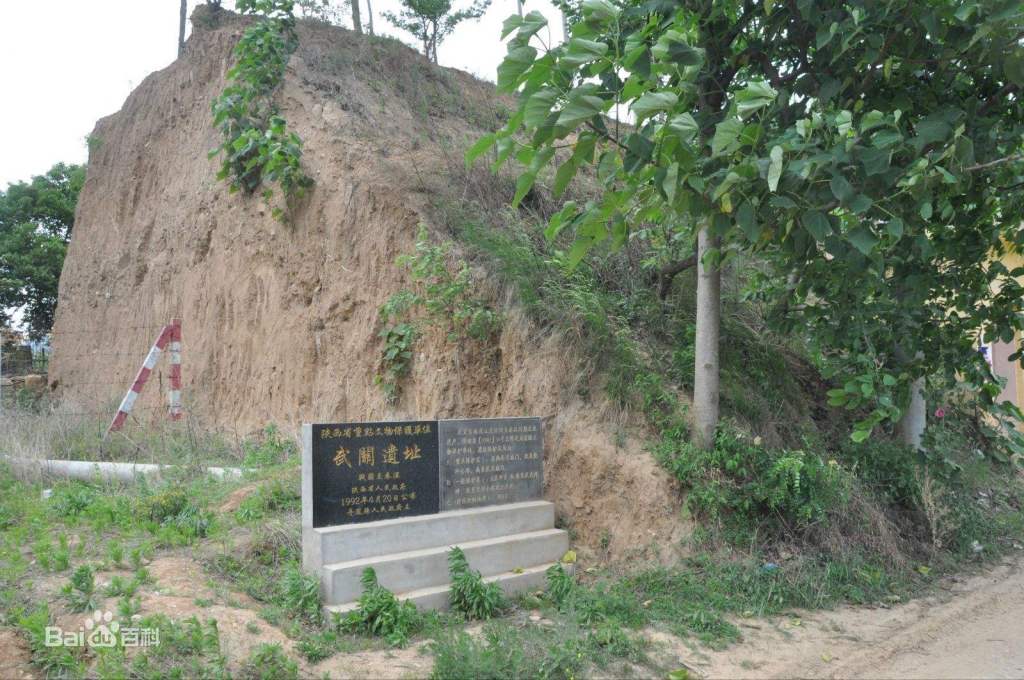
The King of Qin orchestrated a deceptive scheme: one of his generals was disguised as the king, and Qin troops lay in ambush within the city of Wuguan. Upon the King of Chu‘s entry, the gates of the pass were swiftly closed, and he was captured. Subsequently, he was taken westward to the capital city of Xianyang.
At the palace of Zhangtai, the King of Qin granted an audience to the King of Chu, yet with the formalities reserved for a foreign vassal. During this meeting, the King of Qin demanded the territories of Wu and Qianzhong as conditions for a treaty. However, the King of Chu insisted that the alliance treaty be signed before any territorial negotiations, while the King of Qin demanded the surrender of the lands first.
In response to the demands, the King of Chu was incensed, feeling deceived and coerced into relinquishing land. This led him to refuse any further negotiations. Consequently, the King of Qin detained the King of Chu.
The officials of Chu convened in an emergency meeting, grappling with the gravity of their situation: “Our king is detained in the kingdom of Qin, and they demand land in exchange for his release. Simultaneously, our Crown Prince remains a hostage in the kingdom of Qi. If Qin and Qi are collaborating against us, the kingdom of Chu will be left without a leader.”
Amidst this crisis, there was a proposal to elevate a prince residing in the capital city of Ying as the new king. However, Zhao Sui opposed this suggestion, citing that appointing a new prince without the consent of the detained king would be inappropriate.
To mitigate the situation, Zhao Sui took action. He dispatched an envoy to Qi, urging the King of Qi to facilitate the return of the crown prince home. This request was made under the false pretext that the King of Chu had passed away.
King Min of Qi convened all his ministers to strategize and address the predicament at hand. During the discussions, a proposal surfaced suggesting that they should retain the crown prince of Chu and demand the northern lands beyond the Huai River from Chu in exchange for his release.
However, the Prime Minister of Qi objected to this proposal, emphasizing that such an action would be unethical. He argued that if Chu installed a new prince in the capital city of Ying, holding the deposed crown prince hostage would not advance their interest, but diminish their honor among other kingdoms.
The proponent of the initial idea countered this stance, proposing an alternate strategy: if a prince in the capital of Ying were installed as the new king, they could negotiate with him. The bargaining chip would involve a demand for the southeast part of the state in exchange for the crown prince’s life (thus elimination of the throne contender). Failing to meet this demand would result in the installation of the crown prince by force, with the backing of the consensus from the three-kingdom alliance.
Ultimately, King Min of Qi sided with his prime minister’s ethical standpoint. As a result, the crown prince was released. Subsequently, the crown prince returned to the kingdom of Chu and was duly installed as the new king.
The King of Qin recognized the exceptional capabilities of Lord Mengchang as a skilled statesman. Impressed by his talents, the King extended an invitation for Lord Mengchang to visit Qin. To ensure the agreement’s security, the King offered Lord Jingyang as a guarantee to the kingdom of Qi in exchange for Lord Mengchang‘s arrival.Responding to the invitation, Lord Mengchang journeyed to the kingdom of Qin and was subsequently appointed as the prime minister, entrusted with key responsibilities in the governance of Qin.
 Reflection by Rio Grande
Leave a comment